

SaaSpocalypse 2026: AI Disrupts SaaS Industry
The Rise of AI and the Fall of Traditional SaaS
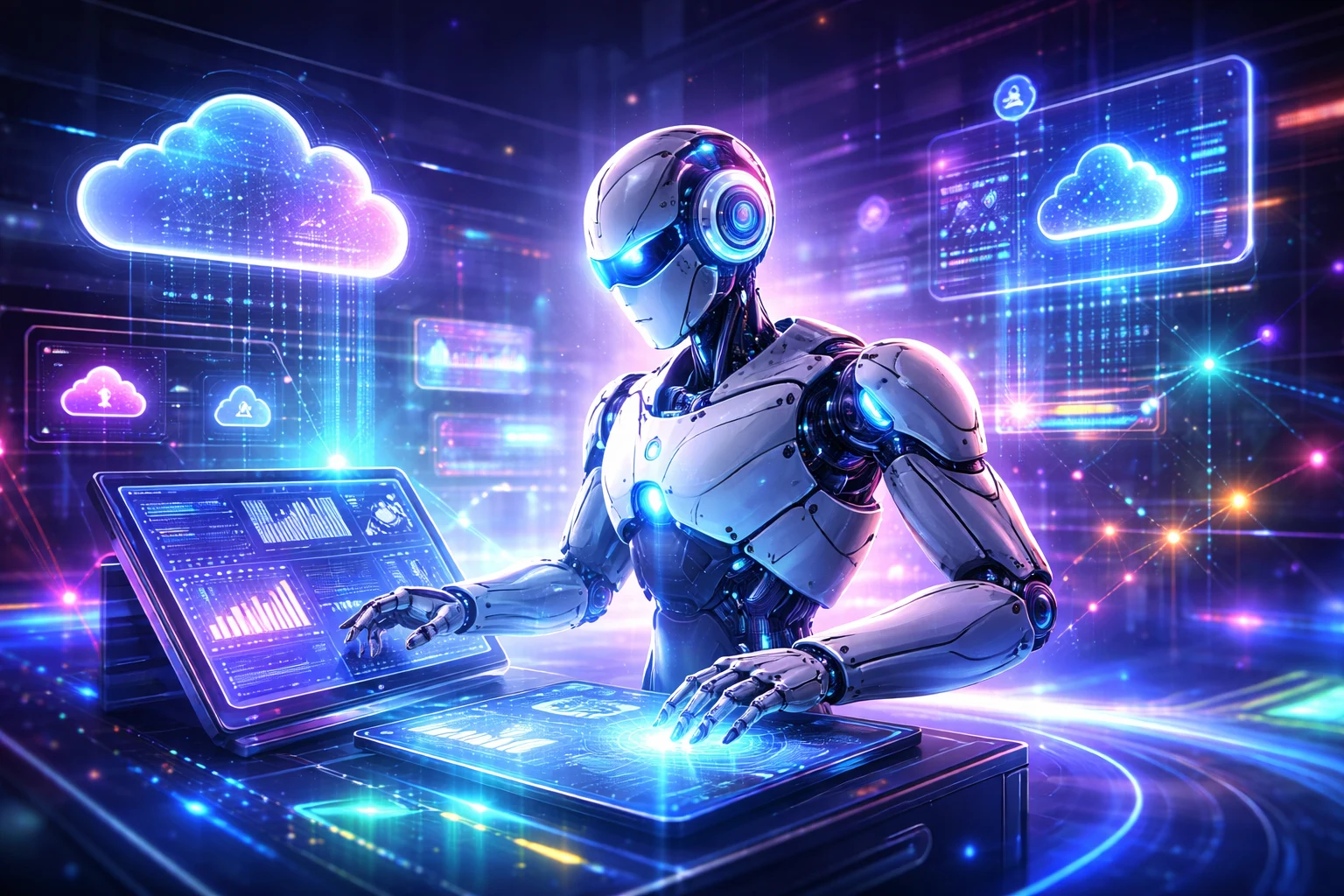
The term “SaaSpocalypse 2026” is no longer just a dramatic headline—it is becoming a real narrative shaping the global software industry. Over the past year, artificial intelligence has rapidly evolved from a supporting feature into the core engine of digital products, fundamentally challenging how Software-as-a-Service (SaaS) companies operate, price, and deliver value. What used to be a stable and predictable business model is now under pressure from a wave of AI-native tools that can replace entire SaaS workflows in seconds. This shift is not incremental; it is structural, and it is forcing both startups and enterprise players to rethink everything from product design to revenue streams.
For years, SaaS dominated the tech ecosystem with its subscription-based model, recurring revenue, and scalable architecture. Companies built billion-dollar valuations by offering tools that streamlined tasks like project management, customer relationship management, and data analytics. However, the emergence of AI agents, generative AI platforms, and autonomous workflows has introduced a new paradigm where users no longer need to rely on multiple SaaS tools. Instead, they can simply instruct an AI to perform complex tasks across different domains, eliminating the need for separate software subscriptions.
This transformation is creating a growing tension within the industry. On one side, traditional SaaS companies are struggling to maintain their value propositions. On the other, AI-first startups are rapidly gaining traction by offering more flexible, intelligent, and cost-efficient solutions. The result is a market environment that feels both exciting and unstable, where innovation is accelerating but disruption is inevitable.
What Is Driving the SaaSpocalypse?
At the heart of the SaaSpocalypse 2026 phenomenon lies a combination of technological breakthroughs and shifting user expectations. One of the biggest drivers is the rise of AI agents, which are capable of performing tasks that previously required multiple SaaS applications. These agents can write code, analyze data, manage workflows, and even make decisions with minimal human input. This level of automation is redefining what software can do and how users interact with it.
Another major factor is the shift in how businesses perceive value. In the past, companies were willing to pay for access to tools, even if they were underutilized. Today, with AI offering on-demand capabilities, businesses are becoming more selective. They are no longer interested in paying for software licenses; instead, they want outcomes. This shift is pushing SaaS providers to move away from traditional pricing models toward usage-based or outcome-based pricing, which aligns more closely with the capabilities of AI-driven solutions.
The rapid growth of open-source AI models is also playing a crucial role. These models lower the barrier to entry for new competitors, allowing startups to build powerful applications without massive infrastructure investments. As a result, the SaaS market is becoming more crowded and competitive, with new players emerging almost daily. This influx of innovation is accelerating the pace of change and making it harder for established companies to keep up.
Finally, the integration of AI into everyday workflows is reducing the need for standalone applications. Instead of switching between multiple tools, users can now rely on a single AI interface to handle a wide range of tasks. This consolidation is one of the most disruptive aspects of the SaaSpocalypse, as it directly challenges the core premise of SaaS: that specialized tools are necessary for productivity.
The Collapse of Traditional Pricing Models
One of the most visible impacts of AI on the SaaS industry is the collapse of traditional pricing models. For years, the standard approach was to charge users based on the number of seats or licenses. This model worked well in a world where software usage was relatively predictable and tied to human activity. However, AI has fundamentally changed this dynamic.
With AI agents capable of performing tasks autonomously, the concept of a “seat” becomes less relevant. A single user can now accomplish what previously required an entire team, thanks to AI automation. This shift is forcing SaaS companies to rethink how they charge for their products. Many are experimenting with usage-based pricing, where customers pay based on the amount of data processed, tasks completed, or value delivered.
This transition is not without challenges. Usage-based pricing introduces uncertainty for both providers and customers, making it harder to predict costs and revenue. It also requires companies to develop new metrics for measuring value, which can be complex and subjective. Despite these difficulties, the trend is gaining momentum, as it aligns more closely with the capabilities and expectations of AI-driven software.
Another emerging model is outcome-based pricing, where customers pay only when specific results are achieved. This approach is particularly appealing in an AI-driven environment, where automation can deliver measurable outcomes. However, it also shifts more risk onto SaaS providers, who must ensure that their solutions consistently deliver value.
AI Agents vs SaaS Tools: A New Battlefield
The competition between AI agents and traditional SaaS tools is becoming one of the defining battles of the tech industry. AI agents are not just another feature; they represent a fundamentally different way of interacting with software. Instead of navigating complex interfaces and workflows, users can simply describe what they want, and the AI takes care of the rest.
This shift is particularly evident in areas like software development, customer support, and data analysis. AI coding agents can generate entire applications from simple prompts, reducing the need for specialized development tools. In customer support, AI chatbots can handle a wide range of queries, minimizing the need for dedicated CRM platforms. In data analysis, AI can process and interpret large datasets without requiring advanced technical skills.
For SaaS companies, this presents both a threat and an opportunity. Those that fail to integrate AI into their products risk becoming obsolete, while those that embrace it can unlock new levels of efficiency and innovation. The challenge lies in finding the right balance between automation and user control, ensuring that AI enhances rather than replaces the user experience.
Winners and Losers in the SaaSpocalypse Era
As the SaaSpocalypse unfolds, it is becoming clear that not all companies will survive the transition. The winners are likely to be those that adapt quickly, embrace AI, and redefine their value propositions. These companies are investing heavily in AI research and development, integrating advanced capabilities into their products, and experimenting with new business models.
On the other hand, companies that rely heavily on legacy systems and traditional pricing models are at risk of falling behind. Without significant innovation, they may struggle to compete with more agile, AI-driven competitors. This is particularly true for companies that offer commoditized services, where differentiation is minimal and price competition is intense.
Interestingly, some of the biggest players in the SaaS industry are already feeling the pressure. Market valuations are fluctuating, and investor sentiment is shifting as the long-term impact of AI becomes clearer. While some companies are successfully navigating the transition, others are facing uncertainty and declining growth prospects.
The Future of SaaS in an AI-First World
Despite the challenges, the future of SaaS is not necessarily bleak. Instead, it is evolving into something new—an AI-first ecosystem where software is more intelligent, adaptive, and integrated. In this new paradigm, SaaS companies will need to focus on delivering unique value that cannot be easily replicated by AI alone.
One potential direction is the development of hybrid solutions that combine the strengths of SaaS and AI. These solutions can offer the reliability and structure of traditional software, while leveraging the flexibility and intelligence of AI. Another promising area is vertical SaaS, where companies specialize in specific industries and provide tailored solutions that address unique challenges.
Security and data privacy will also play a critical role in shaping the future of SaaS. As AI becomes more powerful, the risks associated with data breaches and misuse increase. Companies that prioritize security and build trust with their users will have a significant advantage in this evolving landscape.
Conclusion: Evolution, Not Extinction
The SaaSpocalypse 2026 is not the end of SaaS—it is a transformation. While the industry is facing unprecedented challenges, it is also experiencing a wave of innovation that has the potential to redefine what software can achieve. The companies that succeed will be those that embrace change, leverage AI, and focus on delivering real value to their users.
In many ways, this moment represents a turning point for the tech industry. Just as cloud computing revolutionized software a decade ago, AI is now reshaping the landscape in ways that were previously unimaginable. The path forward may be uncertain, but one thing is clear: the future of SaaS will be defined by those who are willing to adapt, experiment, and innovate in the face of disruption.