
Microsoft Defends SaaS Model in AI Era 2026
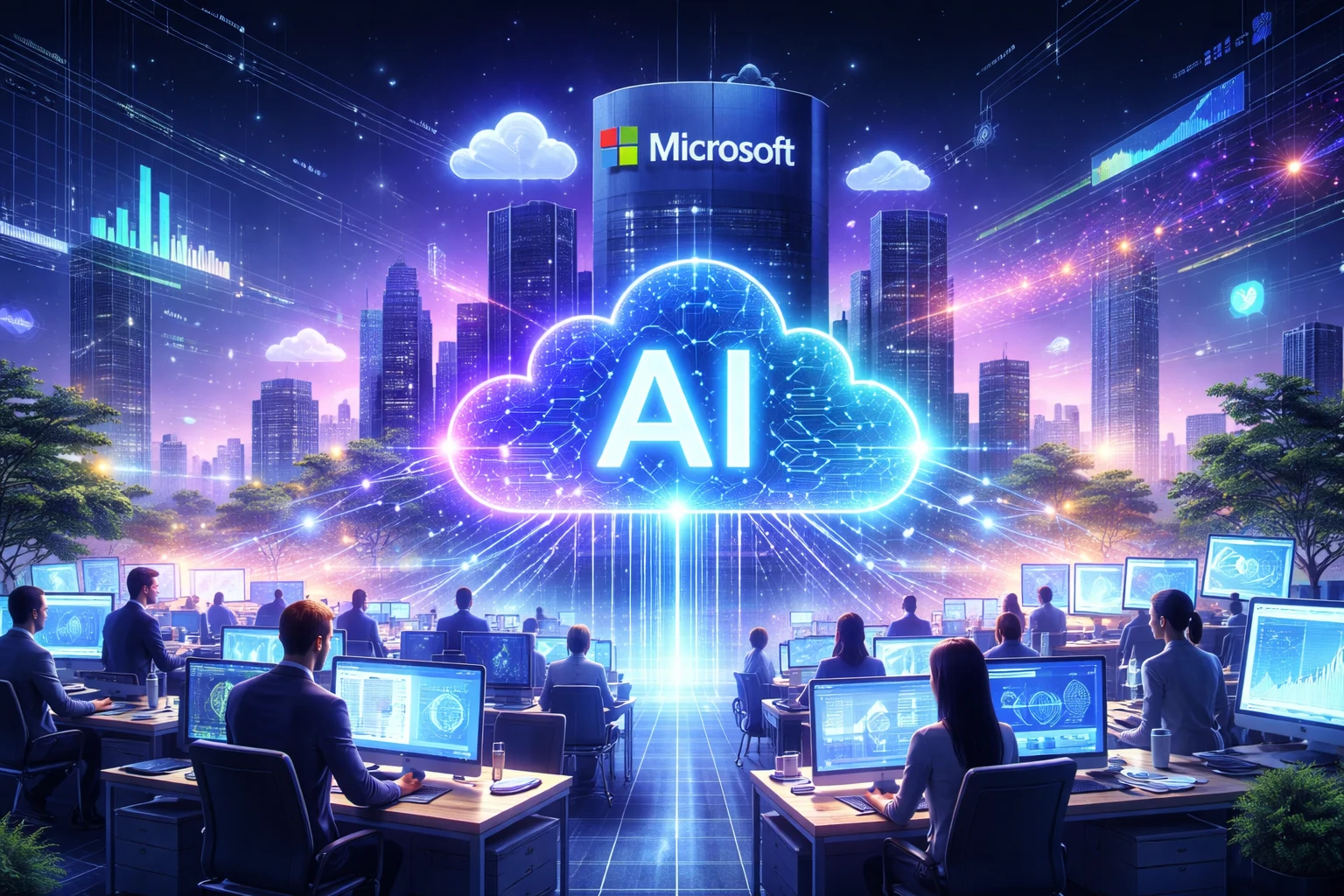
The conversation around software has changed fast in 2026. Everywhere you look, people are asking the same question: will artificial intelligence replace Software as a Service, or will it make SaaS stronger than ever? Some analysts believe AI agents, automation tools, and custom large language models could weaken subscription-based software. Others see a completely different future. One of the loudest voices defending the model is Microsoft, which recently argued that SaaS is far from dead and may actually become more valuable in the next generation of enterprise technology.
That statement matters because Microsoft is not a casual observer. The company sits at the center of cloud computing, workplace software, enterprise security, developer tools, and artificial intelligence. When Microsoft says the SaaS business model still has power, businesses, startups, and investors listen carefully. In a market filled with hype, bold predictions, and nonstop AI launches, Microsoft’s view brings a more grounded perspective.
The real story is not SaaS versus AI. The real story is how AI is changing SaaS into something smarter, faster, and more profitable. That shift is already happening across industries. From productivity suites to finance tools, CRM platforms, HR systems, and cybersecurity dashboards, SaaS products are evolving into AI-native operating systems for modern companies.
Why People Thought SaaS Was in Trouble
For years, SaaS dominated the software world. Instead of buying expensive software once and installing it on company servers, businesses moved to cloud subscriptions. This created predictable revenue for vendors and flexible access for users. It also made software easier to scale globally.
Then generative AI arrived. Suddenly, many people believed users would stop opening traditional apps and instead ask AI assistants to complete tasks directly. Why log into five dashboards if one AI agent can write reports, update data, summarize meetings, and trigger workflows?
That idea created fear across the market. If AI becomes the interface for everything, then maybe SaaS apps become invisible utilities in the background. Investors started asking whether traditional subscription software would lose pricing power. Founders worried about customer churn. Buyers wondered whether to delay contracts until “the AI version” arrived.
This is where Microsoft stepped in with a different argument.
Microsoft’s Core Message About SaaS
Microsoft’s position is simple: software demand is growing, not shrinking. AI does not eliminate the need for software platforms. Instead, AI increases the value of platforms that already manage data, workflows, permissions, compliance, and collaboration.
That point is critical. AI models can generate answers, but businesses need systems that store information securely, track activity, integrate departments, manage users, and produce reliable outcomes. SaaS platforms already do that. AI simply becomes a powerful layer on top.
Think of it this way. AI is the engine, but SaaS is the vehicle. Without structure, governance, and workflow design, the engine cannot create real business value at scale.
Microsoft knows this because its own ecosystem proves it. Products like Microsoft 365, Dynamics, Azure, GitHub, Teams, and security platforms are all enhanced by AI, not replaced by it.
Why SaaS Still Wins in 2026
1. Businesses Need Trusted Systems
Companies do not run on prompts alone. They run on repeatable systems. Finance teams need approved processes. HR teams need employee records. Sales teams need pipeline visibility. Legal teams need compliance logs. Operations teams need dashboards.
AI can help these functions, but the foundation remains software infrastructure. That is where SaaS continues to dominate.
2. Data Is the Real Moat
Many AI tools look impressive in demos, but enterprise value comes from connected data. SaaS companies often hold years of customer history, workflow records, usage patterns, and integrations.
That proprietary data becomes a huge advantage when adding AI features. Instead of generic outputs, SaaS platforms can offer contextual intelligence.
3. Recurring Revenue Still Matters
Subscription revenue remains one of the most attractive business models in tech. It creates visibility, supports long-term planning, and improves valuations when growth is healthy.
Even with AI pricing experiments, recurring SaaS revenue is still highly valuable.
4. AI Needs Distribution
Launching a standalone AI tool is easier than ever. Getting millions of paying users is not. Established SaaS companies already have customer bases, billing systems, support teams, and trust. That gives them a major edge.
How Microsoft Is Proving the Model
Microsoft is not defending SaaS with words alone. It is proving it through product execution.
Microsoft 365 Copilot
Instead of replacing Office apps, Microsoft added AI into Word, Excel, PowerPoint, Outlook, and Teams. Users still need the platform, but now productivity becomes faster and smarter.
Dynamics + AI
CRM and ERP systems remain essential for enterprises. Microsoft is embedding AI into forecasting, customer service, and operations workflows rather than discarding the software stack.
Azure as the SaaS Backbone
Many SaaS startups run on Azure infrastructure. As AI workloads grow, cloud demand also rises. That means Microsoft benefits both as a platform owner and AI provider.
GitHub Copilot
Developers still need repositories, version control, testing pipelines, and deployment tools. AI coding assistance increases productivity, but software development platforms remain central.
The New SaaS Formula: Product + AI + Workflow
The strongest SaaS businesses in 2026 are following a new formula:
Core Product + Embedded AI + Automation Workflow + Usage Data = Stronger Retention and Higher Revenue
This formula matters because customers are no longer paying only for software access. They are paying for outcomes.
Examples include:
- Marketing platforms generating campaign ideas automatically
- HR systems screening applicants faster
- Finance tools detecting anomalies instantly
- Sales platforms drafting outreach sequences
- Support software resolving tickets with AI agents
- Security tools identifying threats in real time
That means SaaS pricing can shift upward when AI clearly saves time or labor.
What This Means for Startups
Microsoft’s defense of SaaS sends a clear signal to founders: do not abandon the SaaS model just because AI is hot.
Instead, build smarter SaaS.
Many startups made the mistake of launching generic chatbot wrappers. Those products often struggle because they lack sticky workflows and proprietary data. A better path is solving real business pain through software enhanced by AI.
Winning startup strategies in 2026 include:
Vertical SaaS + AI
Build for specific industries like healthcare, logistics, real estate, legal, or education. Deep industry workflows are harder to copy.
Workflow Ownership
If your platform becomes part of daily operations, customers stay longer.
Clear ROI
If AI saves 10 hours a week or improves conversion rates, buyers understand value fast.
Hybrid Pricing
Use subscription plans plus usage-based AI features for premium monetization.
What Investors Are Watching
Investors are no longer impressed by “AI” in a pitch deck alone. They now ask harder questions:
- What problem does the product solve?
- How sticky is the workflow?
- Is retention strong?
- Does proprietary data improve outputs?
- Can pricing expand with AI usage?
- Is gross margin healthy?
This is why SaaS is still relevant. Mature SaaS metrics combined with AI upside create attractive opportunities.
Microsoft’s comments reinforce that institutional investors should not dismiss software subscriptions too early.
Challenges SaaS Companies Must Face
Defending the model does not mean every SaaS company wins automatically. 2026 is more competitive than ever.
Feature Commoditization
If every platform adds similar AI tools, differentiation gets harder.
Rising Expectations
Customers expect faster onboarding, better UX, stronger automation, and measurable ROI.
Pricing Pressure
Some users may resist paying extra for weak AI features.
Security Concerns
Handling sensitive company data inside AI workflows requires trust, compliance, and transparency.
Only strong operators will turn AI into lasting advantage.
How SaaS Pricing Is Changing
One of the biggest shifts in 2026 is pricing design.
Old SaaS pricing often used seat-based subscriptions. You paid per employee. But AI changes that model because one worker with automation can produce more output.
Now companies are exploring:
- Per outcome pricing
- Per workflow pricing
- Usage-based AI credits
- Premium automation tiers
- Hybrid seat + AI pricing
Microsoft’s defense of SaaS likely includes this reality: the model is evolving, not disappearing.
Why Enterprises Prefer Existing Vendors
Large organizations rarely replace critical systems overnight. They prefer upgrading trusted vendors instead of migrating everything to risky new tools.
That gives major SaaS providers a huge advantage. If Microsoft can add AI directly into tools enterprises already use daily, adoption friction drops dramatically.
This is one reason incumbents remain powerful in 2026.
Gen Z Workforce and the Future of SaaS
A younger workforce is entering leadership roles with different expectations. They want speed, intuitive design, mobile-first access, automation, and less manual admin work.
Traditional enterprise software often felt slow and painful. AI-enhanced SaaS can finally fix that.
The future platform experience looks like this:
- Ask natural language questions
- Generate reports instantly
- Automate repetitive tasks
- Collaborate inside one workspace
- Personalize dashboards automatically
That combination makes SaaS more attractive, not less.
What Businesses Should Do Now
If you run a company evaluating software in 2026, the smart move is not replacing SaaS blindly. It is reviewing which vendors are evolving fastest.
Ask these questions:
- Does the platform offer real AI productivity gains?
- Is data secure?
- Can workflows be automated?
- Does pricing match value delivered?
- Will the product scale with growth?
- Does the vendor innovate consistently?
The winners will be platforms that combine reliability with innovation.
The Bigger Picture
Every major tech shift creates fear that old models will die. Cloud computing was supposed to kill on-premise software. Mobile apps were supposed to kill desktop workflows. No-code tools were supposed to kill developers.
Reality is usually more nuanced.
AI will disrupt software markets, yes. Some weak SaaS products may disappear. Some categories may consolidate. Some pricing models will be rebuilt.
But the need for business software is not vanishing. It is expanding into a more intelligent era.
That is exactly why Microsoft is defending the model.
Final Verdict
The headline saying Microsoft defends the SaaS business model in 2026 is bigger than a corporate opinion. It reflects a major truth about the tech market: AI needs platforms, data, workflows, and trust to create real enterprise value.
SaaS is not dying. It is mutating into something stronger.
The next generation of winners will not be plain software vendors or raw AI model providers alone. They will be companies that merge both worlds seamlessly.
For startups, that means building AI-native SaaS. For enterprises, it means upgrading smartly. For investors, it means looking beyond hype.
And for the rest of the market, it means one thing is clear: SaaS still matters in 2026.