
Google Cloud AI Agents Reshape SaaS in 2026
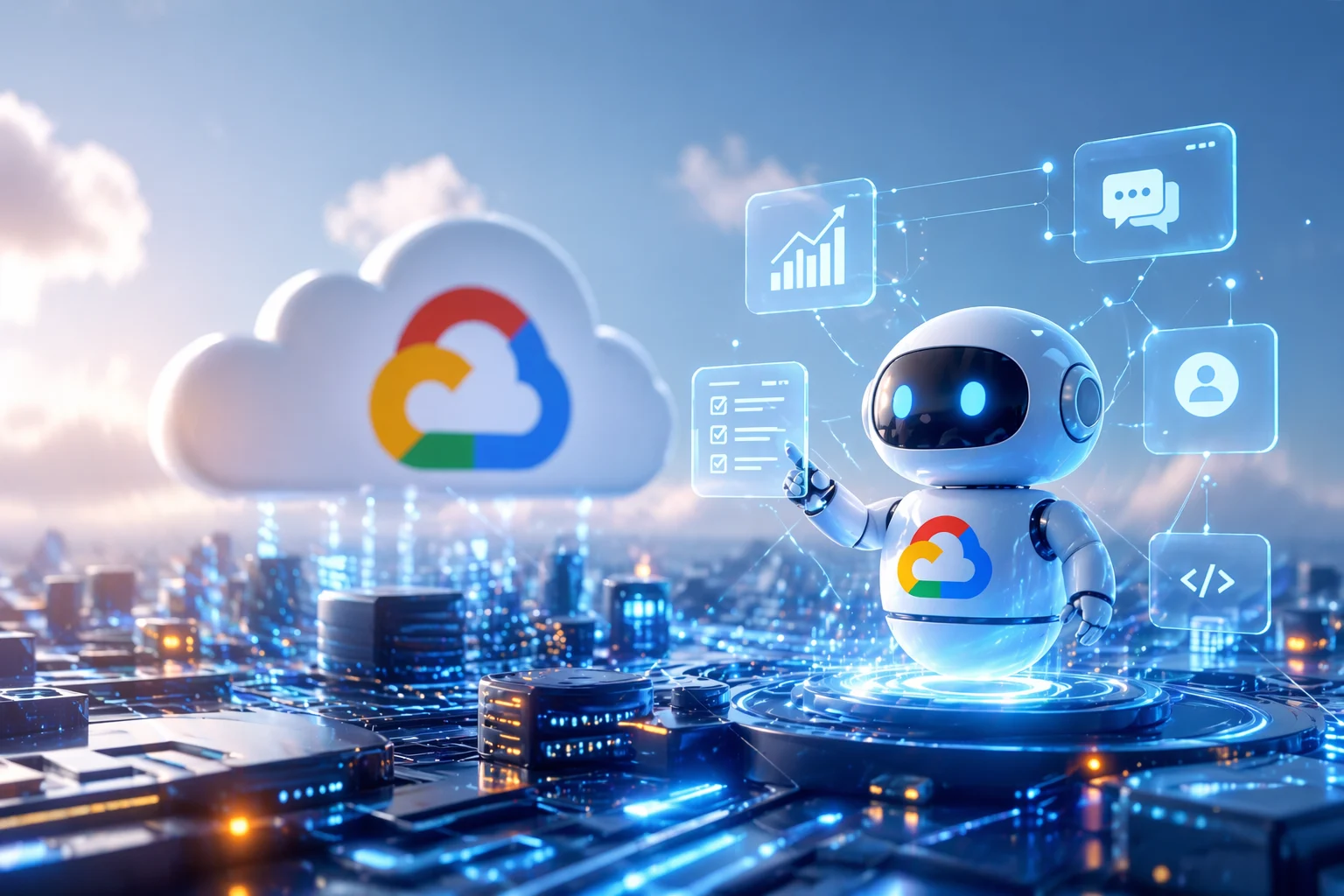
The software-as-a-service (SaaS) industry is entering one of its biggest transformation phases in years, and the latest push from Google Cloud AI agents is becoming a major catalyst behind that shift. In 2026, cloud competition is no longer only about storage, compute power, or subscription pricing. It is now about intelligence, automation, and how quickly platforms can help companies work smarter. Google Cloud has made it clear that the future of SaaS will revolve around AI-powered agents capable of handling tasks, assisting teams, and driving efficiency at scale. This strategic move is already reshaping how businesses think about productivity software, customer service tools, analytics dashboards, and workflow systems.
For years, SaaS products focused on solving one problem at a time. A CRM managed customers, a helpdesk platform handled support tickets, and project management software organized tasks. But in 2026, companies want more than isolated tools. They want connected ecosystems that think, predict, automate, and act in real time. That is where AI agents for SaaS become highly valuable. Instead of waiting for users to manually operate dashboards or process data, intelligent agents can recommend actions, complete repetitive workflows, summarize insights, and collaborate with human teams.
Google Cloud’s aggressive investment in this area signals something bigger than a feature update. It signals a new software era where AI becomes the operating layer across SaaS platforms. For startups, enterprises, developers, and investors, this trend could redefine the next decade of digital business.
What Are AI Agents in SaaS?
To understand why this matters, it helps to define the concept clearly. AI agents are advanced software systems powered by large language models, machine learning, and automation frameworks that can perform tasks with minimal supervision. Unlike basic chatbots from previous years, modern AI agents can reason, use tools, analyze data, remember context, and take multi-step actions.
Inside a SaaS platform, these agents may perform functions such as:
Automating Customer Support
AI agents can answer customer questions instantly, retrieve account information, solve common issues, and escalate only complex tickets to human staff. This dramatically reduces response times while improving support quality.
Managing Internal Workflows
A finance SaaS tool can use AI agents to reconcile invoices, flag unusual spending, and generate reports. A marketing SaaS platform can build campaigns, suggest keywords, and optimize ad budgets automatically.
Data Analysis at Scale
Many businesses collect huge amounts of data but struggle to turn it into action. AI agents can scan dashboards, summarize trends, detect anomalies, and recommend next steps in plain language.
Cross-App Collaboration
Modern companies use dozens of SaaS tools simultaneously. AI agents can connect calendars, CRM systems, docs, chats, analytics, and HR software into a single intelligent workflow layer.
This is why the term AI-powered SaaS automation is gaining momentum in 2026.
Why Google Cloud Is Betting Big on AI Agents
Google Cloud has long competed against Amazon Web Services and Microsoft Azure. While infrastructure remains critical, differentiation increasingly comes from value-added intelligence. Google’s advantage lies in years of AI research, data infrastructure, and products like Gemini models.
By pushing AI agents for enterprise SaaS, Google Cloud can attract businesses that want ready-to-use intelligence rather than building everything from scratch. Instead of asking companies to hire huge machine learning teams, Google can provide plug-and-play AI systems integrated into cloud environments.
This strategy delivers several benefits:
1. Higher Customer Retention
When businesses deeply integrate AI workflows into their SaaS stack, switching providers becomes harder. That creates stronger long-term customer loyalty.
2. Premium Revenue Opportunities
Companies often pay more for productivity gains than for raw infrastructure. AI agents unlock premium subscription tiers and enterprise contracts.
3. Faster Ecosystem Growth
Developers building SaaS apps on Google Cloud gain access to AI tools faster, encouraging innovation across startups and enterprises.
4. Stronger Brand Positioning
Being seen as a leader in practical AI solutions helps Google Cloud compete more effectively in the enterprise market.
The New SaaS Model: Software That Works for You
Traditional SaaS gave users dashboards, menus, filters, and manual processes. The new model gives users outcomes. That shift sounds simple, but it changes everything.
Instead of logging into a CRM to manually review leads, an AI agent can prioritize prospects, draft follow-up emails, and schedule meetings automatically. Instead of reviewing hundreds of support tickets, a service manager can receive a clean summary of root causes and recommended fixes.
This is why many analysts say 2026 is the year SaaS becomes proactive.
Users no longer want software that only waits for commands. They want software that helps them win time back.
How AI Agents Change SaaS Pricing
One of the most interesting impacts of this trend is pricing structure. SaaS companies traditionally charged by seat, usage, or feature tiers. But AI agents introduce a new logic: charging based on value delivered.
Examples include:
Per Task Completed
A platform may charge based on automated tasks completed by AI agents.
Per Outcome Generated
Lead generation tools may charge for qualified leads produced through AI workflows.
Per Agent Tier
Customers may pay more for advanced reasoning agents than basic automation bots.
Consumption Plus Subscription
Base subscription plus AI usage credits is becoming increasingly common.
This pricing evolution creates fresh monetization opportunities for SaaS vendors.
Why Startups Should Watch This Trend
The rise of Google Cloud AI agents is not only good news for tech giants. It may be even more important for startups.
Small SaaS teams historically faced huge barriers:
- Limited engineering resources
- Expensive AI infrastructure
- Slow enterprise credibility
- Difficulty scaling globally
Now, startups can build on Google Cloud’s ecosystem and launch products with powerful intelligence from day one. That means a five-person team can create tools that previously required a fifty-person company.
This levels the playing field dramatically.
Expect to see new SaaS categories emerge in 2026:
- AI legal workflow tools
- AI recruiting SaaS
- AI procurement platforms
- AI healthcare admin software
- AI finance copilots
- AI vertical SaaS for niche industries
The startup scene could become one of the biggest winners.
Enterprise Adoption Will Accelerate Fast
Large companies often move slower than startups, but once they commit, scale happens quickly. Enterprises are under pressure to reduce costs, improve speed, and modernize legacy systems. AI agents offer all three benefits.
Common enterprise use cases include:
Sales Teams
Agents summarize calls, score opportunities, draft outreach, and update CRM records automatically.
HR Departments
Agents screen resumes, schedule interviews, answer employee policy questions, and organize onboarding steps.
Operations Teams
Agents monitor workflows, detect delays, assign tasks, and generate performance reports.
Finance Divisions
Agents process invoices, forecast budgets, and identify unusual transactions.
Once executives see measurable ROI, expansion across departments usually follows.
Security and Trust Remain Critical
Of course, enterprise customers do not adopt new technology blindly. Security remains one of the biggest decision factors in cloud SaaS buying.
Google Cloud must prove that AI agents are:
- Secure with enterprise-grade controls
- Transparent in decision-making
- Compliant with regulations
- Reliable under heavy workloads
- Safe with sensitive company data
This is where trust becomes a competitive weapon. The cloud provider that combines strong AI with dependable governance will gain market share.
How This Impacts Microsoft and AWS
Google Cloud’s move also increases pressure on rivals.
Microsoft already has a strong position through Azure and Copilot integrations across Office products. Amazon Web Services remains dominant in infrastructure scale. But Google’s focused messaging around intelligent agents for SaaS can create new momentum.
Competition likely intensifies in these areas:
- AI development platforms
- Agent marketplaces
- SaaS integrations
- Enterprise automation suites
- Industry-specific AI solutions
For customers, this is good news because competition often drives better products and lower prices.
What SaaS Founders Need to Do Now
If you run or plan to build a SaaS company, ignoring this shift could be risky. The market is changing fast, and users will compare your product to AI-enhanced competitors.
Key actions founders should consider:
Embed AI Where It Saves Time
Do not add AI only for hype. Focus on workflows customers hate doing manually.
Design Human + AI Collaboration
Users still want control. Great products let AI assist rather than dominate.
Use Clear ROI Messaging
Sell time saved, revenue gained, errors reduced, and speed improved.
Build Trust Early
Explain data usage, privacy controls, and reliability standards.
Move Fast, Iterate Faster
The AI market evolves monthly. Slow product cycles can be dangerous.
The Future of SaaS UX Is Conversational
Another major shift is user experience. Menus and complex dashboards may not disappear, but conversational interfaces are becoming central.
Instead of learning dozens of clicks, users can simply ask:
- Show my highest churn-risk customers
- Build a Q2 revenue forecast
- Create a hiring pipeline summary
- Find delays in our onboarding funnel
- Draft next week’s campaign plan
This dramatically lowers friction. Software becomes more accessible for non-technical users, which expands adoption.
Challenges Still Exist
Despite the hype, challenges remain real.
Hallucinations
AI systems can generate wrong outputs if not properly controlled.
Integration Complexity
Many enterprises still run fragmented legacy systems.
Cost Management
Heavy AI workloads can become expensive without optimization.
User Resistance
Some teams fear automation or distrust AI recommendations.
Vendor Dependence
Businesses may worry about becoming too dependent on one cloud ecosystem.
The winners in SaaS will be companies that solve these issues cleanly.
Why 2026 Feels Like a Turning Point
The SaaS industry has seen major eras before:
- First wave: cloud replaces on-premise software
- Second wave: mobile-first SaaS expansion
- Third wave: API integrations and no-code tools
- Fourth wave: data-driven automation
Now we are entering the fifth wave: AI-native SaaS platforms.
Google Cloud’s push into AI agents helps validate that this is not a niche trend. It is becoming mainstream strategy.
When one of the world’s biggest cloud providers commits resources to AI-driven enterprise software, the signal is clear. The market opportunity is massive.
What Businesses Should Expect Next
Over the next 12 to 24 months, businesses should expect:
- More SaaS products launching built-in AI agents
- Subscription plans centered on AI outcomes
- Stronger competition between cloud ecosystems
- Faster enterprise adoption of automation tools
- Increased demand for AI governance solutions
- New job roles managing AI workflows
This transition will likely feel gradual at first, then suddenly obvious.
Final Thoughts
The headline Google Cloud pushes AI agents for SaaS in 2026 is more than another tech story. It represents a structural shift in how software is built, sold, and used.
For businesses, this means more efficient operations and smarter tools. For SaaS founders, it means a new competitive standard. For employees, it means workflows increasingly supported by intelligent systems. For cloud providers, it means the next battle is about usable AI, not just infrastructure.
The companies that adapt early may unlock major growth. Those that wait too long may discover their competitors are already moving faster with smaller teams and smarter systems.
In 2026, the future of SaaS is no longer just software in the cloud. It is software that thinks, acts, and scales beside you.