
Vortixel Cyber Alarm for SaaS in the AI Era
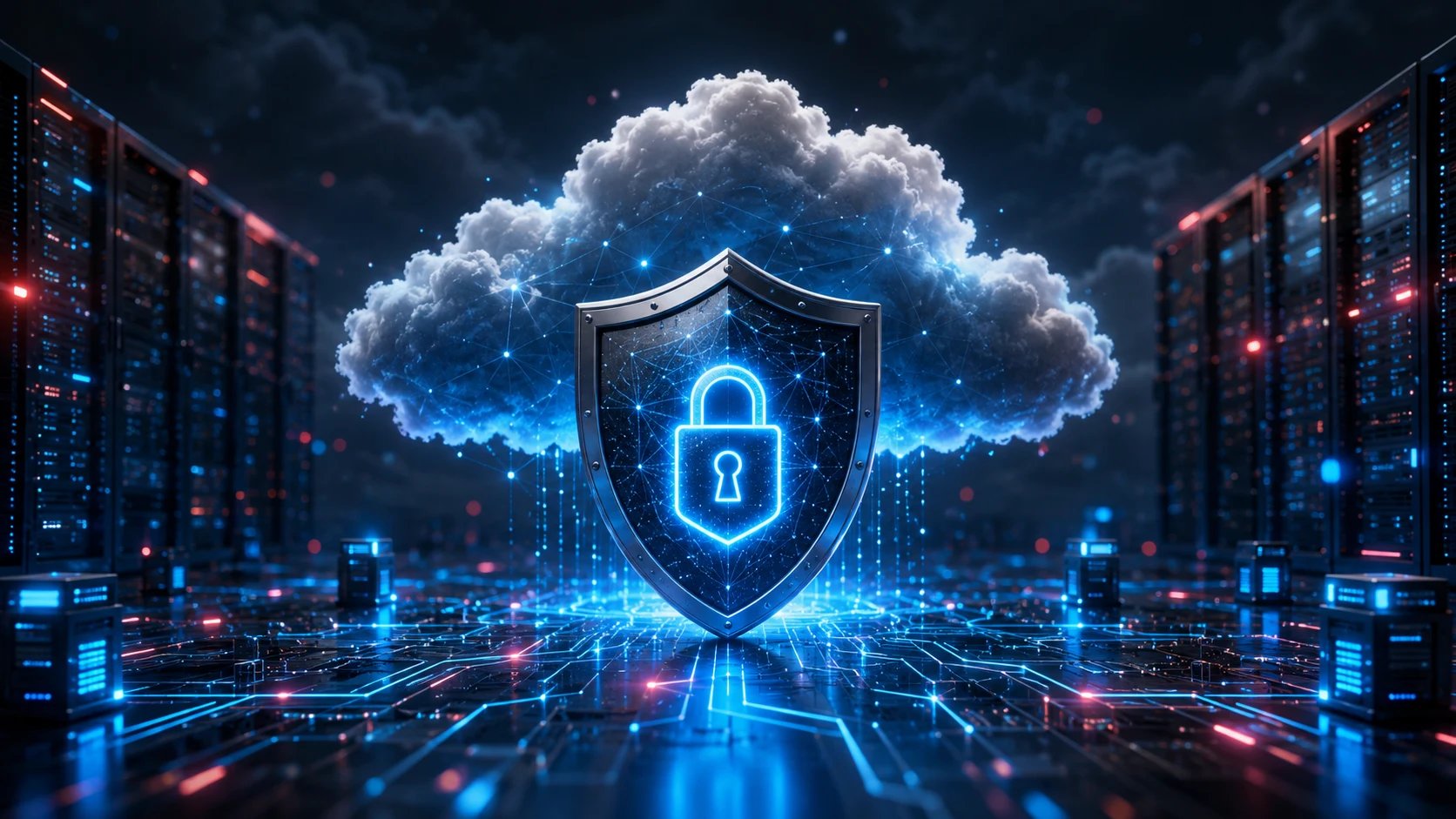
The new Vortixel Cyber Alarm for SaaS is not just another warning about hackers, passwords, or suspicious links. It reflects a bigger shift happening across the global software economy, where artificial intelligence is making cyberattacks faster, cheaper, and harder to predict. For SaaS founders, product teams, cloud architects, and startup operators, the old security playbook suddenly feels too slow for the moment. The latest international conversations around frontier AI and cyber risk show that digital defense is no longer a back-office technical issue. It is now a business survival question for every platform that stores customer data, runs cloud workflows, or depends on user trust.
Vortixel sits inside that tense new reality as a modern SaaS idea shaped by speed, automation, and constant connectivity. A platform like Vortixel is expected to be always available, easy to scale, simple to integrate, and flexible enough for teams working across different markets. That promise is powerful, but it also increases exposure because every API endpoint, login flow, third-party plugin, and cloud permission can become a doorway. When global cyber agencies warn that advanced AI models may soon amplify offensive cyber capabilities, SaaS companies cannot treat the message as distant noise. They need to read it as a signal that the rules of software security are changing in real time.
Why the Vortixel Cyber Alarm for SaaS Matters
The phrase Vortixel Cyber Alarm for SaaS matters because it captures the pressure now landing on every cloud-first business. SaaS products are built to move quickly, launch updates often, and serve users without friction. That culture creates innovation, but it can also create blind spots when security reviews, access controls, and dependency checks fail to keep the same pace. In the past, a small startup could delay deeper security investment until it reached enterprise scale. In the current AI-driven threat environment, waiting that long can turn a promising product into an easy target.
The new cyber alarm is especially relevant because SaaS platforms often become central hubs for customer operations. A single SaaS dashboard may connect billing data, identity systems, analytics tools, marketing pipelines, support tickets, and internal documents. If attackers compromise that dashboard, they do not only enter one application; they may gain a route into an entire business ecosystem. This is why SaaS security must now be seen as supply-chain security, customer protection, and brand protection at the same time. Vortixel, as a SaaS-facing concept, needs to reflect that bigger responsibility from the beginning.
International warnings around frontier AI add urgency because attackers are no longer limited to manual research and slow trial-and-error methods. AI systems can help scan codebases, summarize exposed services, generate exploit ideas, write convincing phishing messages, and automate reconnaissance at scale. Even when these tools are not perfect, they lower the barrier for less skilled attackers and increase the productivity of experienced ones. That means defenders are not only fighting more advanced threats; they are fighting more frequent attempts from more directions. For SaaS teams, the volume problem may become just as dangerous as the sophistication problem.
The AI Shift Behind the New SaaS Threat Model
The biggest change in the threat model is not simply that AI can write malicious code. The deeper issue is that AI can connect many steps of an attack into a faster workflow. A human attacker might spend days mapping a SaaS product, reading documentation, testing login behavior, checking old packages, and searching for leaked credentials. An AI-assisted attacker can compress parts of that process into minutes or hours, especially when public documentation, GitHub repositories, changelogs, and API references are available. This turns ordinary product transparency into something that must be managed with more security awareness.
SaaS companies love documentation because it helps developers adopt a product quickly. They publish API examples, integration guides, SDK instructions, webhook references, and troubleshooting notes to remove friction. In a healthy ecosystem, that openness helps customers build faster. In a hostile environment, the same material may help attackers understand how a platform is structured. The answer is not to hide useful documentation, but to assume that every public detail may be analyzed by both legitimate developers and automated threat actors.
AI also changes the economics of social engineering. SaaS businesses usually depend on customer support teams, onboarding calls, email notifications, admin invites, and billing communications. Attackers can use AI to generate messages that sound more natural, personalized, and context-aware than older phishing attempts. They can imitate the tone of a vendor, create fake urgency around payment issues, or build believable support conversations that push users toward dangerous actions. Because SaaS products often live inside daily workflows, users may act quickly before they pause to verify.
This is where Vortixel’s security mindset must go beyond infrastructure. Firewalls, encryption, and access logs are important, but they are only one layer of the defense story. A modern SaaS platform also needs user education, safer defaults, clear permission design, and smart detection of unusual behavior. It needs systems that understand when an admin is acting outside normal patterns or when an API token suddenly begins making strange requests. Security must become part of product experience, not a hidden feature buried in technical documentation.
Cloud Complexity Is Becoming a Security Challenge
The rise of cloud infrastructure helped SaaS products scale faster than ever before. Startups can now deploy globally, connect managed databases, add serverless functions, monitor traffic, and launch AI-powered features without building every layer themselves. This speed is one reason SaaS remains such a strong business model. But cloud convenience also creates complexity, and complexity often creates risk. A platform can be secure in one layer while still exposed through misconfigured storage, weak access policies, forgotten test environments, or unmanaged third-party services.
Modern SaaS teams often use dozens of external services to move quickly. They may rely on cloud hosting, identity providers, analytics tools, payment processors, email platforms, error tracking, customer support software, and AI model APIs. Each service adds value, but each connection also expands the attack surface. If one integration is poorly configured or one API key is leaked, attackers may find a path into sensitive workflows. For Vortixel, this means cyber resilience must include vendor management, secrets management, and regular audits of every connected service.
Cloud-native systems also change the meaning of visibility. In a traditional environment, teams might monitor a smaller set of servers and network paths. In a SaaS environment, activity can happen across containers, functions, databases, queues, edge networks, CI/CD pipelines, and multiple admin consoles. Without strong observability, security teams may not understand what normal behavior looks like. If normal behavior is unclear, abnormal behavior becomes harder to detect before damage spreads.
This is why the most mature SaaS companies are moving toward unified security visibility. They want one clear picture of user activity, infrastructure events, access changes, code deployments, and data movement. For smaller SaaS teams, that may sound expensive, but the principle still applies at any scale. Even a lean startup can centralize logs, protect production credentials, enforce multi-factor authentication, and review privileged access. The goal is not to build a perfect enterprise security operation overnight; the goal is to avoid being blind when something unusual happens.
From Human-Scale Defense to Machine-Scale Defense
The newest cyber debate is not only about attackers using AI. It is also about defenders needing AI to keep up. When attacks become machine-assisted, security teams cannot rely only on manual ticket reviews, weekly scans, or slow incident response meetings. They need automation that can detect anomalies, prioritize alerts, recommend fixes, and reduce the time between discovery and action. This shift from human-scale defense to machine-scale defense is becoming one of the defining trends in Cybersecurity.
For SaaS companies, machine-scale defense can start with practical steps rather than futuristic tools. Automated dependency scanning can catch vulnerable packages before they reach production. Infrastructure-as-code checks can identify risky cloud permissions before deployment. AI-assisted monitoring can help summarize unusual login behavior or suspicious API traffic. Security automation can also help customer-facing teams respond faster when users report account takeover attempts or strange system activity.
However, automation must be handled carefully because bad automation can create false confidence. A SaaS team should not assume that adding an AI security tool instantly solves the problem. AI systems can miss context, over-prioritize noisy alerts, or recommend actions that need human review. The strongest model is human judgment supported by machine speed. Vortixel should treat AI defense as a co-pilot for security operations, not a replacement for accountability.
This balance matters because customers increasingly care about how SaaS vendors manage risk. Enterprise buyers now ask detailed questions about encryption, data retention, access controls, incident response, compliance, and AI usage. A startup that can answer those questions clearly earns trust faster than one that treats security as an afterthought. In a crowded SaaS market, security can become a sales advantage instead of a cost center. The companies that understand this early will look more mature than their size suggests.
What the Trend Means for SaaS Founders
For founders, the new cyber alarm changes how product strategy should be planned. Security can no longer be postponed until after growth, funding, or enterprise expansion. Investors, partners, and customers are becoming more aware that AI-driven threats can hit young companies as easily as large corporations. A small SaaS platform may actually be more attractive to attackers because it often has weaker controls and faster-moving teams. That makes early security discipline a founder-level responsibility, not just an engineering ticket.
Founders should start by identifying the most valuable assets inside their SaaS product. These may include customer data, admin accounts, billing systems, authentication flows, proprietary algorithms, API keys, and production infrastructure. Once those assets are clear, the team can decide which controls matter most. Not every feature needs the same level of protection, but the most sensitive areas should receive strong safeguards from day one. This creates a security roadmap that matches business risk instead of chasing random tools.
The next founder-level question is how fast the company can recover. Many teams focus only on preventing attacks, but resilience also depends on response and restoration. If an attacker compromises an account, how quickly can the team detect it, lock it down, notify affected users, and restore trust? If a deployment introduces a vulnerability, how quickly can the team roll back and patch? In the AI era, response time may become one of the clearest measures of SaaS maturity.
Founders also need to think about security messaging. Customers do not want vague promises that a platform is “secure by design” without evidence. They want clear explanations of practical protections, such as multi-factor authentication, role-based access control, encryption, audit logs, secure development practices, and incident response readiness. A SaaS brand like Vortixel can use security transparency as part of its market identity. When done honestly, this builds confidence without turning the product into fear-based marketing.
Impact on Product Teams and Developers
Product teams are directly affected because security choices shape user experience. A login process that is too loose invites risk, while a process that is too strict may frustrate users. Permission settings that are too broad may simplify onboarding, but they can create serious exposure when an account is compromised. Developers and designers need to work together to create flows that are both safe and usable. In the SaaS world, security that users cannot understand often becomes security that users bypass.
Developers also need to treat AI-assisted coding with more caution. AI tools can speed up development, generate boilerplate, suggest tests, and explain unfamiliar frameworks. But they can also introduce insecure patterns when prompts are vague or reviews are rushed. A generated authentication snippet, database query, or file upload handler may look clean while still hiding subtle security weaknesses. The right approach is to use AI as a productivity layer while keeping code review, testing, and threat modeling firmly in human hands.
Secure development should become part of daily engineering rhythm. That means reviewing dependencies, avoiding hardcoded secrets, validating input, protecting session handling, limiting database permissions, and testing authorization boundaries. It also means documenting security decisions so future team members understand why certain controls exist. In fast-growing SaaS teams, undocumented security logic often becomes fragile when engineers change roles or move quickly. Good documentation reduces that fragility and helps teams scale without losing control.
Product roadmaps should also include security features that customers can see and use. Examples include audit logs, device management, session history, admin alerts, permission templates, and safer API token controls. These features do more than protect the platform; they give customers confidence that they can manage their own risk. For Vortixel, this kind of product-led security could become a meaningful differentiator. A SaaS platform that helps customers protect themselves becomes more valuable than one that only protects its own backend.
Practical Security Moves for Vortixel-Style SaaS
The first practical move is to make identity security non-negotiable. Every SaaS platform should support strong passwords, multi-factor authentication, secure session management, and protection against brute-force attempts. Admin accounts need extra controls because they can change settings, access data, invite users, and generate tokens. Teams should also monitor login anomalies, such as impossible travel patterns, repeated failures, or sudden access from unusual devices. Identity remains one of the easiest doors for attackers, so it deserves constant attention.
The second move is to reduce unnecessary exposure. SaaS teams should review public endpoints, staging environments, debug panels, storage buckets, admin routes, and old domains. Anything connected to the internet should have a clear business reason for being exposed. Old prototypes and forgotten test systems can become weak points because nobody monitors them closely. Reducing exposure is not glamorous, but it is one of the fastest ways to lower risk.
The third move is to patch faster and with more discipline. AI-assisted attackers can react quickly when vulnerabilities become known, so slow patch cycles are becoming more dangerous. Teams should maintain an inventory of dependencies, frameworks, containers, and cloud services. They should know which systems are critical and which vulnerabilities require urgent action. A patching culture that once felt “nice to have” is now central to SaaS survival.
The fourth move is to build incident response before a crisis happens. A SaaS company should know who makes decisions during an incident, who communicates with customers, who investigates logs, and who handles technical containment. The team should prepare message templates, escalation paths, backup procedures, and recovery steps. Waiting until an attack happens creates confusion at the worst possible moment. Preparedness does not eliminate damage, but it can reduce panic and shorten recovery time.
- Enable multi-factor authentication for all internal and customer admin accounts.
- Review API permissions so tokens only receive the access they truly need.
- Automate dependency scanning across code repositories and deployment pipelines.
- Centralize security logs to detect unusual activity faster.
- Test incident response before customers are affected by a real breach.
The Business Cost of Ignoring the Alarm
Ignoring the new cyber alarm can create costs that go far beyond technical cleanup. A breach can damage customer trust, slow sales conversations, trigger legal reviews, increase insurance pressure, and distract the team from product growth. For SaaS companies, reputation is part of the product because customers depend on the platform every day. If users believe a platform cannot protect their data, they may leave even if the features are strong. Trust is difficult to win and very easy to lose.
The cost is especially high for B2B SaaS because customers often connect the product to internal workflows. A security failure can disrupt operations, expose confidential information, or create risk for downstream partners. This means one vendor’s weakness can become another company’s incident. Enterprise customers understand that chain reaction, which is why vendor security reviews are becoming more serious. A startup that cannot pass those reviews may lose deals before pricing or product quality even enters the conversation.
There is also a talent cost. Engineers, product managers, and security professionals prefer to work in environments where risk is handled responsibly. If a company repeatedly cuts corners, skilled employees may lose confidence in leadership. Security debt can become cultural debt when teams feel pressured to ship features without protecting users. Strong security practices help build a healthier engineering culture where speed and responsibility can exist together.
At the same time, the business upside of good security is growing. A SaaS company that can show strong controls, clear governance, and fast response processes can stand out in a cautious market. Security can support premium positioning, enterprise expansion, and long-term customer retention. Vortixel can use this moment to frame security not as fear, but as confidence. The best SaaS brands will make protection feel like part of the value proposition.
How AI Can Strengthen SaaS Defense
Although AI creates new risks, it also gives defenders powerful tools. AI can help analyze large volumes of logs, detect unusual behavior, classify alerts, summarize incidents, and guide teams through complex investigations. It can support code review by pointing out risky patterns or missing validation. It can help customer support identify account takeover signals before users fully understand what happened. Used carefully, AI can make small SaaS security teams more capable than they were a few years ago.
AI can also improve vulnerability management. Instead of simply listing hundreds of issues, intelligent systems can help prioritize which vulnerabilities matter most based on exposure, exploitability, business impact, and affected customers. This is important because SaaS teams often lack the time to fix everything immediately. Better prioritization helps them focus on the issues most likely to cause real damage. In a fast-moving threat environment, knowing what to fix first can be as valuable as knowing what is broken.
Another useful area is security communication. During incidents, teams need to explain technical issues clearly to executives, customers, and support teams. AI can help draft summaries, organize timelines, and translate complex findings into readable language. Human review remains essential because accuracy and accountability matter. Still, AI can reduce the communication burden during stressful moments and help teams move faster with more clarity.
Vortixel-style SaaS companies should approach AI defense with a clear governance model. They should decide which data can be processed by AI tools, which actions require human approval, and how outputs are logged or reviewed. They should avoid sending sensitive customer data into tools without proper agreements and controls. They should also test AI security recommendations instead of accepting them blindly. The right mindset is not “AI will save us,” but “AI can help us defend better when governed well.”
Building Trust in a More Hostile Internet
The internet is becoming more automated, more adversarial, and more dependent on software platforms. SaaS companies are caught in the middle of that transformation because they provide the tools businesses use to operate. Customers want products that are fast and simple, but they also want assurance that their data, workflows, and identities are protected. This tension will shape SaaS competition over the next several years. The winners will be companies that make security part of the product experience instead of a hidden promise.
Trust can be built through transparency, but transparency must be specific. A SaaS platform can publish security pages, compliance updates, responsible disclosure policies, and clear explanations of data handling. It can show customers how to enable safer settings and why those settings matter. It can communicate incidents honestly without using vague language or minimizing risk. Trust grows when customers see that a company has prepared for difficult scenarios before they happen.
Trust also grows when security is designed for real users. Not every customer has a dedicated security team, and not every admin understands technical risk. SaaS products should guide users toward safer decisions with clear prompts, useful defaults, and understandable warnings. A confusing permission screen can be just as risky as a weak password policy if users approve access without understanding the consequences. Vortixel should aim to make secure behavior feel natural, not complicated.
This is also where brand voice matters. A SaaS company does not need to sound cold or intimidating when discussing security. It can be clear, direct, and practical while still sounding human. Customers appreciate honesty more than exaggerated claims. In the AI era, calm and credible communication may become one of the strongest signals of a trustworthy platform.
Conclusion: The SaaS Wake-Up Call Is Here
The Vortixel Cyber Alarm for SaaS is ultimately a wake-up call about timing. The threat landscape is moving faster because AI is accelerating both attack and defense. SaaS companies cannot wait until they are large, famous, or heavily regulated before taking security seriously. Every login page, API token, integration, cloud permission, and support workflow now belongs inside a broader risk conversation. In this new environment, security is not a delay to innovation; it is what makes sustainable innovation possible.
For Vortixel, the smartest path is to build with resilience from the start. That means combining secure engineering, strong identity controls, cloud visibility, AI-assisted defense, practical incident response, and customer-facing transparency. It also means treating security as a living process rather than a one-time checklist. The companies that adapt early will be better prepared for the next wave of AI-driven cyber pressure. The SaaS brands that ignore the alarm may still move fast, but they may not move safely enough to last.