

SaaS 2026 Enters the Self-Running Software Era
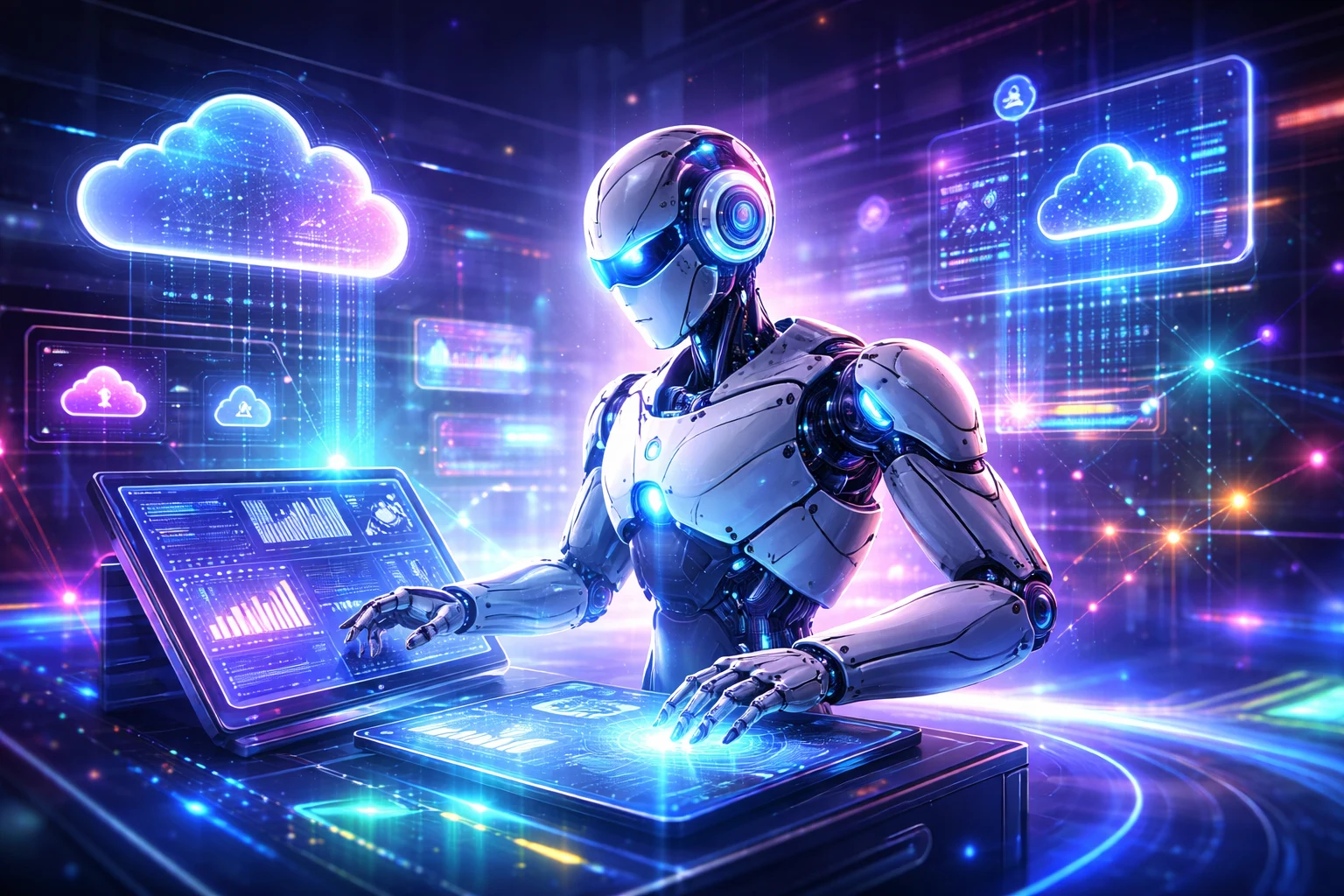
SaaS 2026 is no longer just about cloud dashboards, subscription tools, and teams clicking through menus to get work done. The software industry is moving into a new phase where applications are expected to think, act, coordinate, and complete tasks with far less human instruction than before. This shift is not happening as a distant science-fiction concept; it is already appearing in the way companies talk about AI agents, workflow automation, enterprise productivity, and the next generation of cloud platforms. For years, SaaS promised access, speed, collaboration, and scalability, but the new promise is more ambitious: software that does not only support work, but actively performs it. That is why the rise of SaaS 2026 feels like a turning point for founders, enterprise buyers, developers, and anyone watching the future of digital business.
The old SaaS playbook was simple and powerful: build a useful web application, host it in the cloud, charge recurring fees, and improve the product over time. That model created giants across customer relationship management, finance, HR, design, project management, cybersecurity, analytics, and developer tools. But as artificial intelligence becomes embedded into the core of business software, the competitive question is changing fast. A product is no longer judged only by how many features it offers, how clean the interface looks, or how many integrations it supports. In 2026, the sharper question is whether the software can actually reduce the amount of manual work a company needs to do in the first place.
Why SaaS 2026 Is Becoming Self-Running Software
The biggest reason SaaS 2026 is moving toward self-running software is the rise of agentic AI. Unlike basic chatbots or traditional automation scripts, AI agents are designed to understand goals, break them into steps, use tools, make decisions within boundaries, and continue working across a workflow. In a SaaS context, this means a sales platform may not only display leads, but also prioritize accounts, draft outreach, update records, schedule follow-ups, and alert managers when a deal is at risk. A finance tool may not only show expenses, but also detect anomalies, prepare reports, classify invoices, and recommend budget adjustments. The software stops being a passive destination and starts becoming an active participant in the business process.
This is a major change because SaaS has always required humans to operate the system. Employees log in, search for data, move information from one field to another, create reports, review dashboards, and trigger next steps manually. Even when automation existed, it usually depended on fixed rules created by administrators or developers. Self-running SaaS changes that by allowing software to interpret context and adapt to messy real-world situations. Instead of asking users to keep feeding the machine, the machine begins to carry more of the workflow on its own.
For business leaders, this sounds attractive because every company is under pressure to do more with fewer resources. Teams want faster execution, lower operational costs, better customer experiences, and cleaner internal processes. Traditional SaaS helped by centralizing work and making tools accessible from anywhere, but it also created new layers of complexity. Many companies now manage dozens or even hundreds of subscriptions, each with its own interface, data, permissions, and reporting structure. The next wave of AI-powered SaaS is trying to solve that problem by making software less like another workplace to manage and more like a digital teammate that handles the boring parts.
From Tools People Use to Systems That Execute
The simplest way to understand the shift is this: old SaaS helps people use tools, while new SaaS helps systems execute outcomes. A project management app, for example, used to be a place where teams created tasks, assigned owners, added deadlines, and tracked progress. In the self-running software era, that same system could analyze meeting notes, create tasks automatically, detect blockers, remind the right people, adjust timelines, and summarize progress for leadership. The value is no longer just the database of tasks; the value is the intelligence sitting on top of that database. When software can move work forward without waiting for every human click, the meaning of productivity changes.
This creates a new kind of product expectation. Users will not be impressed by software that simply stores information if another product can act on that information intelligently. A customer support platform that only organizes tickets may look outdated next to one that understands intent, suggests replies, escalates urgent cases, detects churn signals, and updates knowledge bases automatically. A marketing platform that only schedules campaigns may feel limited beside one that identifies audience segments, tests creative angles, generates performance summaries, and recommends the next experiment. In this environment, workflow intelligence becomes a core product feature, not a bonus add-on.
The same pressure applies to enterprise software. Large companies are tired of fragmented systems that require employees to copy information between departments. If AI agents can safely operate across CRM, ERP, finance, HR, legal, and support platforms, then the value of SaaS becomes much broader. A self-running workflow could move from customer request to contract review, invoice creation, fulfillment update, and account reporting with fewer manual handoffs. That does not mean humans disappear from the process, but it does mean their role becomes more supervisory, strategic, and exception-focused. People will spend less time pushing data through systems and more time judging whether the system is making the right decisions.
The Business Impact of AI-Powered SaaS
The business impact of AI-powered SaaS will be felt first in productivity, but it will not stop there. When software can execute tasks independently, companies may rethink staffing models, department structures, vendor budgets, and even the definition of software return on investment. A SaaS product that saves five hours per employee each week is easier to justify than one that merely adds another dashboard. A platform that improves decision speed, reduces repetitive work, and prevents costly mistakes can become deeply embedded in daily operations. In 2026, buyers are likely to ask vendors not only what the product does, but what work the product can remove.
This changes pricing too. Traditional SaaS pricing often depends on seats, usage limits, storage, features, or tiers. But if software begins doing work on behalf of people, vendors may experiment with pricing based on outcomes, completed tasks, automation volume, or AI agent capacity. A company may not want to pay for fifty users if an AI layer allows ten employees to manage the same workload. At the same time, vendors will argue that their products create more value because they replace manual effort, speed up execution, and reduce operational drag. The future SaaS pricing debate will likely revolve around how to measure the value of work done by software itself.
There is also a competitive impact for startups. In the past, many SaaS startups competed by building a cleaner interface or a narrower vertical solution than the incumbents. That strategy can still work, but it is no longer enough on its own. A startup entering the market in 2026 needs to think about automation depth, AI reliability, data access, compliance, security, and integration from day one. The winners will not simply wrap a chatbot around an old product category; they will redesign workflows around what intelligent software can actually do. That is why the SaaS category is becoming one of the most important battlegrounds in technology again.
Why Data Becomes the Real Moat
Self-running software depends heavily on data quality. An AI agent can only act well if it understands the company’s context, historical patterns, permissions, customer behavior, business rules, and current priorities. This makes data architecture more important than ever. SaaS platforms with clean, structured, and deeply integrated data will have a major advantage over products that only add AI features on the surface. In many cases, the difference between a useful agent and a dangerous one will come down to whether the system has access to the right information at the right time.
This is why enterprise buyers will become more cautious and more demanding. They will want to know where data is stored, how AI models use it, whether sensitive information is protected, and how decisions can be audited. A self-running SaaS product that touches finance, customer records, employee information, or legal documents cannot behave like an experimental toy. It must provide logs, permissions, human approval points, rollback options, and clear accountability. The more powerful the software becomes, the more serious the governance layer must be.
Data ownership will also become a strategic issue. If a SaaS vendor uses a customer’s operational data to make its AI better, the customer will want clarity on what is shared, retained, anonymized, or excluded. Companies will also worry about vendor lock-in because the more an AI system learns their internal processes, the harder it may be to switch away. In the old SaaS world, migration was already painful because of data exports and workflow changes. In the self-running SaaS world, migration may also mean losing a layer of learned operational intelligence.
Cybersecurity Becomes a Core SaaS Feature
As software becomes more autonomous, cybersecurity becomes even more critical. A traditional SaaS breach is already dangerous because attackers may access accounts, files, customer data, or business systems. But a compromised AI agent could be even more damaging if it has permission to take actions, move data, generate communications, approve workflows, or interact with connected apps. That means the security model for SaaS 2026 cannot rely only on passwords, basic permissions, and standard monitoring. It needs identity controls, behavior analysis, least-privilege access, and real-time detection of unusual agent activity.
The security challenge is not only external attacks. Companies must also manage the risk of software making incorrect decisions inside normal operations. An AI agent might misread an instruction, use outdated data, send a message to the wrong audience, or trigger an action that should have required human review. In regulated industries, that kind of mistake can create legal, financial, or reputational problems. This is why human-in-the-loop design will remain important even as software becomes more capable. The best SaaS products will balance autonomy with control, giving teams the ability to approve sensitive actions before they happen.
Security teams will need better visibility into what AI agents are doing. It will not be enough to know which human user logged into the platform. Companies will need audit trails showing which agent performed which action, what data it used, what instruction guided it, and whether a person approved the final step. This creates a new opportunity for SaaS vendors focused on observability, compliance, access management, and AI governance. In the era of self-running software, trust becomes a product feature that buyers will actively compare.
What This Means for SaaS Founders
For SaaS founders, the message is clear: building another dashboard is no longer enough. A founder needs to identify the painful workflow, understand the decisions behind it, and design software that can remove friction from the entire process. The strongest products will not simply answer user questions; they will complete useful business actions with accuracy, context, and measurable impact. This requires deeper product thinking than adding a generic AI assistant in the corner of the screen. The goal should be to create software that understands the user’s job and helps finish it faster.
Founders also need to decide whether they are building horizontal or vertical AI SaaS. Horizontal products serve broad use cases across many industries, such as communication, analytics, documentation, and productivity. Vertical products focus on specific sectors such as healthcare, legal, real estate, logistics, education, finance, or manufacturing. In the self-running era, vertical SaaS may have an advantage because industry-specific workflows often require specialized data, compliance knowledge, terminology, and approval processes. A generic AI agent may be impressive, but a deeply trained industry agent can become mission-critical.
Distribution will also change. In the old SaaS market, founders could win attention with content marketing, product-led growth, free trials, and strong onboarding. Those channels still matter, but buyers are becoming more skeptical of vague AI claims. A startup will need to demonstrate real workflow outcomes, not just shiny demos. Case studies, benchmarks, security documentation, and clear return-on-investment stories will become more important. The companies that prove their software saves time, reduces errors, and improves revenue will stand out from the flood of AI-branded products.
What Businesses Should Do Before Adopting Self-Running SaaS
Businesses should not rush into self-running SaaS without preparing their internal systems. The first practical step is to map the workflows that waste the most time. These are usually repetitive processes involving approvals, reporting, data entry, customer follow-up, internal coordination, or document review. Once those workflows are clear, companies can identify where AI-powered software could safely assist or automate. The goal is not to automate everything at once, but to find high-impact areas where software can reduce manual effort without creating unnecessary risk.
The second step is to clean up data. Many companies want AI benefits, but their data is scattered across spreadsheets, outdated tools, messy CRMs, and disconnected departments. A self-running SaaS platform will struggle if the underlying information is incomplete, duplicated, or inconsistent. Before giving an AI system more responsibility, businesses should improve data hygiene, define ownership, and create clearer workflows around information updates. Better data does not sound as exciting as AI, but it is often the difference between a reliable system and a frustrating one.
The third step is to set clear boundaries. Companies should decide which actions software can take automatically and which actions still require human approval. Low-risk tasks like summarizing notes, categorizing tickets, drafting reports, or suggesting next steps may be safe to automate early. Higher-risk tasks like approving payments, changing legal terms, sending sensitive customer messages, or modifying security settings should require review. This layered approach allows businesses to benefit from automation while maintaining control over important decisions.
The Human Role Will Change, Not Disappear
One of the biggest fears around self-running software is that it will replace large parts of the workforce. The reality is more complex. Some repetitive tasks will definitely shrink, especially in operations-heavy roles where employees spend much of their time moving information between systems. But businesses will still need humans to define strategy, judge quality, handle exceptions, build relationships, interpret nuance, and make ethical decisions. The role of workers will shift from operating software manually to supervising systems that operate with increasing independence.
This shift will require new skills. Employees will need to understand how to prompt, monitor, correct, and evaluate AI-driven workflows. Managers will need to design processes where human judgment and software execution work together. Technical teams will need to integrate AI agents safely across systems while maintaining security and reliability. Non-technical employees will also need better AI literacy because they will interact with automated systems in daily work. In many organizations, the most valuable people will be those who can combine domain expertise with the ability to guide intelligent tools.
There is also a cultural challenge. People may resist self-running software if they feel it is being imposed without transparency or if they fear being judged by automated systems. Companies should communicate clearly about what the software is meant to do, how decisions are reviewed, and where humans remain responsible. Adoption will be stronger when employees see AI as a tool that removes low-value work rather than a threat designed to replace them. The most successful organizations will treat AI transformation as both a technical project and a people project.
The Future of SaaS Competition
The future of SaaS competition will likely split the market into three groups. The first group will be legacy platforms that successfully rebuild around AI agents, automation, and deeper workflow intelligence. These companies have strong customer bases and massive datasets, but they must move carefully because enterprise trust is hard to protect. The second group will be AI-native startups that design products from scratch around autonomous execution. These startups may move faster and feel more modern, but they must prove they can scale securely and survive enterprise procurement.
The third group will be traditional SaaS products that fail to evolve. These tools may still have users, but they risk becoming replaceable utilities if they do not create deeper value. A product that only stores data or displays dashboards may be absorbed into larger platforms or replaced by AI-native alternatives. Buyers will increasingly compare software based on how much work it removes, not how many screens it offers. This will force every SaaS company to rethink its product roadmap, pricing model, and long-term positioning.
At the same time, not every product needs full autonomy. Some categories will benefit more from decision support than complete automation. Creative tools, strategic planning platforms, and high-stakes professional software may still require heavy human involvement. The real opportunity is not to make software independent for the sake of it, but to find the right balance between automation, intelligence, and user control. The best SaaS companies will know when the software should act, when it should suggest, and when it should stay quiet.
Conclusion: SaaS 2026 Is a New Operating Layer
SaaS 2026 marks the beginning of a new operating layer for digital business. The market is moving beyond cloud tools that wait for users to click and toward software that can understand goals, coordinate workflows, and execute tasks with increasing autonomy. This shift will create new winners, pressure old business models, and force companies to think more seriously about data, security, governance, and workforce readiness. It will also change how buyers measure software value, because the strongest products will be judged by outcomes rather than features alone. The self-running software era is not just a trend in SaaS; it is a reset of what business software is supposed to do.
For founders, the opportunity is to build products that remove real operational pain instead of simply adding another layer of interface. For enterprise leaders, the challenge is to adopt AI-powered SaaS carefully, with strong data foundations and clear human oversight. For workers, the future will reward those who can guide, evaluate, and improve intelligent systems rather than only operate traditional tools. The next generation of SaaS will not be defined by who has the most features, but by who can turn software into a trusted execution engine. In that sense, SaaS 2026 is the moment software begins to work more like a capable partner than a passive platform.