

AI Agent Platforms Are Replacing Legacy SaaS
The software industry is going through one of the biggest identity shifts it has seen in years, and honestly, most people are only starting to notice it now. For more than a decade, businesses lived inside dashboards, tabs, and complicated enterprise tools that promised productivity but often delivered friction instead. Teams had to jump between project management apps, CRM systems, customer support platforms, analytics tools, automation software, and dozens of browser windows just to complete one workflow. That system worked for a while because there was no better alternative. Now, the rise of AI agent platforms is changing the entire rhythm of modern software, and legacy SaaS applications are beginning to look outdated much faster than expected.
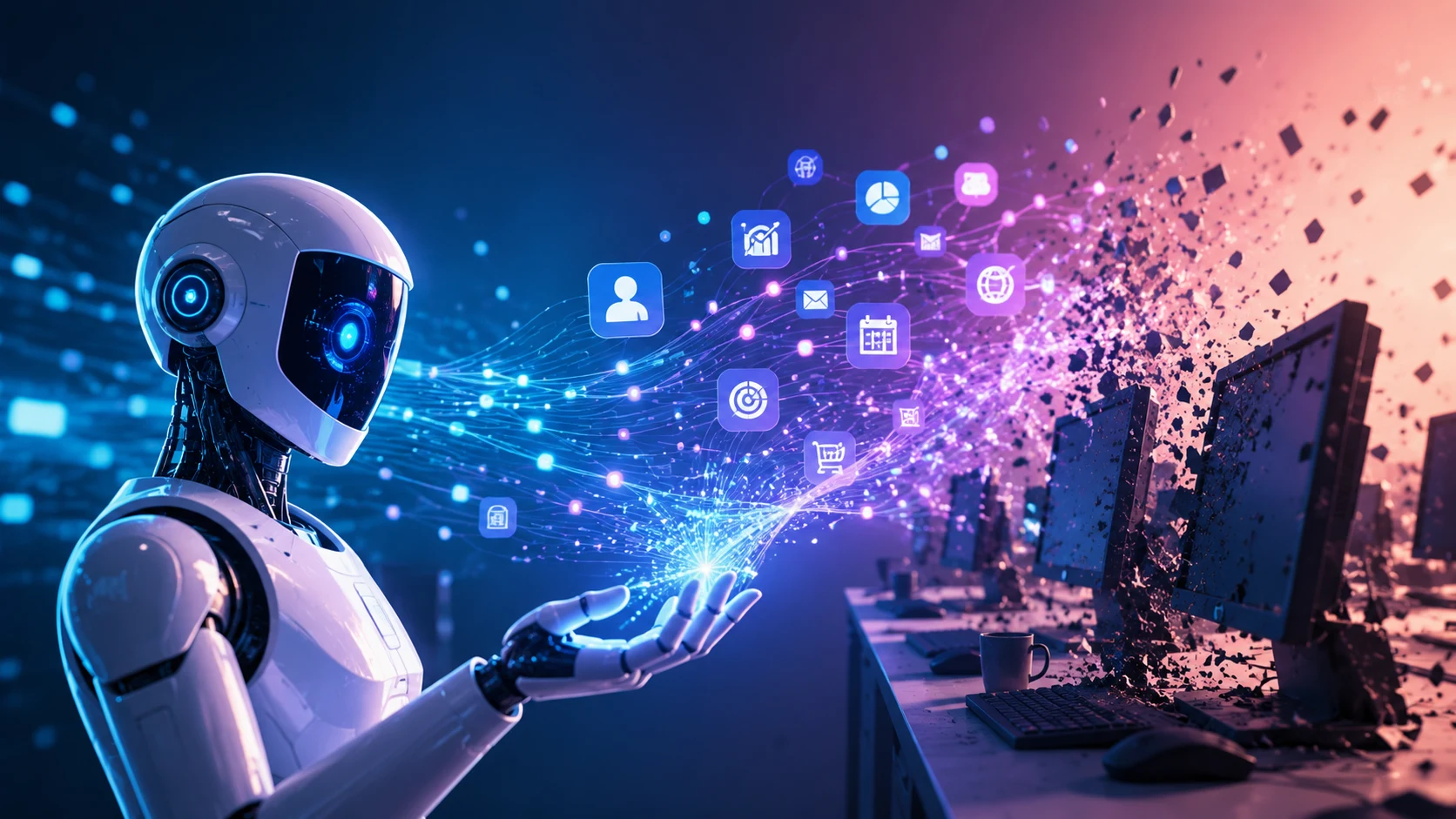
The new generation of software is not just smarter. It behaves differently. Instead of waiting for users to manually click through menus and configure workflows themselves, AI agents can understand goals, execute tasks, communicate with other tools, and even make decisions in real time. This shift feels less like another SaaS trend and more like the beginning of a completely different computing era. Businesses are starting to realize they do not necessarily need fifty disconnected apps when one intelligent AI system can coordinate everything automatically.
That is why investors, startups, and enterprise companies are moving aggressively toward AI-driven automation. The conversation is no longer about whether AI can support SaaS products. The real discussion now is whether traditional SaaS products can survive without becoming AI-native. Companies that built their entire business model around static dashboards and manual workflows suddenly face pressure from AI agent systems capable of replacing multiple tools at once. For users, this transformation feels exciting. For legacy software companies, it feels dangerous.
The End of Traditional SaaS Workflows
For years, SaaS platforms followed the same formula. A company built a dashboard, added integrations, created subscription tiers, and convinced businesses to manage operations through that interface. Over time, these tools became increasingly bloated because every customer demanded more features. Eventually, many enterprise apps became so overloaded that teams needed separate training just to use them efficiently. Employees spent more time learning software than actually solving problems.
This is exactly the environment where AI agent SaaS started gaining attention. Instead of asking users to adapt to software interfaces, AI agents adapt to user intent. That difference sounds small at first, but it completely changes the user experience. A sales manager no longer needs to manually generate reports, sort customer data, or configure follow-up automations across five applications. An AI agent can simply understand the request, gather the necessary data, execute the workflow, and provide actionable insights instantly.
The shift also reflects a deeper frustration with how legacy SaaS evolved over time. Many modern workers feel overwhelmed by constant notifications, endless dashboards, and fragmented productivity ecosystems. Businesses originally adopted SaaS to simplify operations, yet many companies now operate inside software chaos. AI agents promise something radically different: software that acts more like an intelligent assistant rather than another complicated tool demanding attention every hour.
Another reason traditional workflows are weakening is because younger digital workers expect immediacy. Gen Z professionals grew up with conversational technology, algorithmic recommendations, and AI-powered platforms. They naturally prefer systems that respond like humans rather than systems requiring manual navigation through dozens of menus. In that sense, the rise of AI automation platforms is not only a technological shift but also a cultural one.
Why AI Agents Feel More Human Than Software
One reason AI agents are disrupting the SaaS market so quickly is because they remove the mechanical feeling of traditional enterprise software. Most old business applications were designed around rigid structures. Users needed to follow predefined steps, fill forms manually, and interpret data themselves before taking action. AI agents work differently because they operate through context and intent instead of fixed interactions.
Imagine a marketing team launching a campaign. In a legacy SaaS environment, someone might need to use separate tools for analytics, copywriting, project management, customer segmentation, and reporting. With an advanced AI SaaS platform, those tasks can happen through one conversational workflow. The AI agent understands campaign objectives, drafts marketing copy, schedules content, analyzes engagement metrics, and adjusts strategies automatically based on real-time performance.
This feels more natural because humans communicate through goals rather than interfaces. People do not think in dashboard structures. They think in outcomes. AI agents bridge that gap by translating human objectives directly into executable digital actions. That is why many users describe AI agent systems as feeling less like software and more like digital coworkers.
The psychological impact matters more than many businesses realize. Employees increasingly want technology that reduces mental fatigue rather than adding more operational complexity. Traditional SaaS platforms often create cognitive overload because workers constantly switch between systems. AI agents reduce that friction by acting as a central operational layer across multiple workflows simultaneously.
The market momentum behind this transformation is massive. Enterprise companies are investing heavily in AI infrastructure because they understand that user expectations are permanently changing. Once teams experience workflows driven by intelligent automation, it becomes difficult to return to slower manual systems. Legacy SaaS companies now face a brutal challenge: evolve into AI-first ecosystems or risk becoming obsolete faster than anticipated.
AI Agent Platforms Are Consolidating Software Ecosystems
One of the biggest reasons AI agent technology is shaking the SaaS industry is because it threatens software fragmentation itself. Traditional SaaS ecosystems became enormous because every business problem produced another specialized tool. Companies ended up paying for separate platforms handling communication, analytics, sales tracking, automation, customer support, and internal collaboration. Over time, organizations accumulated hundreds of subscriptions across departments.
AI agents disrupt that model because they can operate across systems instead of being trapped inside one interface. A single AI layer can coordinate multiple workflows simultaneously, reducing dependency on individual standalone applications. That creates a future where businesses may not need dozens of separate tools anymore.
This possibility terrifies many SaaS providers because their business models depend on long-term platform dependency. If AI agents become the main operational interface for companies, users may stop caring which backend software powers the workflow. The AI layer becomes the real product while traditional applications fade into infrastructure.
Another important factor is cost efficiency. Businesses are increasingly focused on reducing operational expenses, especially after years of aggressive SaaS spending. CFOs are questioning whether companies truly need hundreds of overlapping subscriptions when AI-driven platforms can automate much of the same work more efficiently. In uncertain economic environments, software consolidation becomes extremely attractive.
The transition is already visible across industries. Customer service teams use AI agents to manage tickets automatically. Developers rely on AI coding assistants to accelerate production cycles. HR departments automate recruitment workflows using AI screening systems. Marketing teams deploy AI-powered campaign managers capable of handling optimization tasks without constant human supervision. These changes are not theoretical anymore. They are happening in real businesses right now.
The Rise of Autonomous Business Operations
The most disruptive part of the AI agent revolution is not automation alone. Businesses have used automation for years. What changes everything is autonomy. Traditional automation systems only executed predefined instructions. AI agents can evaluate situations, adapt strategies, and make contextual decisions dynamically.
That distinction matters because it transforms software from passive infrastructure into active operational intelligence. Instead of waiting for instructions, AI agents proactively identify inefficiencies, recommend actions, and sometimes execute improvements automatically. This creates an entirely different relationship between businesses and software systems.
For example, an AI sales agent might notice declining customer engagement trends before managers recognize the issue themselves. The system could automatically adjust outreach strategies, prioritize high-value leads, and generate personalized follow-up campaigns without requiring manual intervention. In older SaaS ecosystems, employees needed to interpret reports manually before responding.
This level of operational intelligence is why many analysts believe AI business automation could redefine enterprise productivity over the next decade. Companies are no longer looking for software that merely stores information. They want software capable of producing outcomes independently.
At the same time, this evolution introduces tension inside the workforce. Employees worry about which roles AI agents might replace. Some professionals fear that automation will reduce demand for operational positions traditionally focused on repetitive digital workflows. Others see AI agents as collaborative tools capable of enhancing creativity and reducing burnout.
The reality probably sits somewhere in the middle. AI agents are unlikely to eliminate all human work, but they will absolutely reshape how work is structured. Roles centered around repetitive coordination tasks may shrink significantly, while strategic, creative, and human-centered responsibilities become more valuable.
Legacy SaaS Companies Face an Identity Crisis
Many established SaaS companies are currently experiencing an uncomfortable transition period. Their existing products were designed before generative AI fundamentally changed user expectations. Now they must rebuild infrastructure, redesign workflows, and integrate intelligent systems without destroying their existing business models.
This is harder than it sounds. Legacy SaaS companies often operate with massive technical debt accumulated over years of rapid growth. Their platforms were built around interface-driven experiences, not autonomous AI systems. Retrofitting advanced AI capabilities into those environments requires enormous engineering effort.
Meanwhile, AI-native startups are moving much faster because they build products around AI agents from day one. These startups do not carry the burden of outdated architecture or legacy workflows. They can experiment aggressively with conversational interfaces, autonomous operations, and cross-platform AI coordination without protecting old revenue streams.
The competitive pressure is becoming intense. Investors increasingly prioritize startups building intelligent AI ecosystems instead of traditional SaaS dashboards. Venture capital firms understand that the next dominant software companies may not resemble previous generations of enterprise applications at all.
Some legacy SaaS brands will survive by evolving successfully into AI-first platforms. Others may disappear entirely if they fail to adapt quickly enough. The software industry has seen this pattern before during previous technological transitions. Companies that ignored cloud computing eventually lost relevance. The same risk now exists around AI agents.
How Businesses Are Adapting to AI-First Software
Despite the disruption, many organizations are embracing the transition enthusiastically because the productivity benefits are difficult to ignore. Businesses adopting AI-powered SaaS solutions often report faster workflows, reduced operational costs, and improved scalability across departments.
One major advantage is workflow acceleration. AI agents dramatically reduce time spent on repetitive administrative tasks. Employees can focus more on strategic thinking, creative execution, and relationship building instead of manual coordination. That productivity boost becomes especially valuable in highly competitive industries where speed matters.
Companies are also discovering that AI agents improve decision-making by processing massive amounts of operational data faster than humans can manage manually. Intelligent systems can identify behavioral patterns, customer trends, and workflow inefficiencies that might otherwise remain hidden for months.
Another interesting shift involves software accessibility. Traditional enterprise platforms often required technical expertise or specialized onboarding processes. AI agents simplify interactions because users communicate through natural language instead of technical interfaces. This lowers the barrier to entry for employees across different skill levels.
However, adoption is not always smooth. Businesses still face concerns around privacy, security, compliance, and AI reliability. Enterprise leaders want powerful automation, but they also need transparency and accountability when AI systems make decisions affecting customers or operations. Trust remains one of the biggest challenges for widespread AI agent adoption.
The Future of SaaS May Become Invisible
One of the most fascinating ideas emerging from the AI revolution is the possibility that software interfaces themselves may become less important over time. In traditional SaaS environments, the application interface was the product. Companies competed through dashboard design, workflow organization, and feature availability.
In an AI agent world, users increasingly interact through conversations and automated actions rather than direct interface manipulation. That means the visible software layer may gradually fade into the background while AI orchestration becomes the primary experience.
This concept changes how people think about digital products entirely. Instead of opening separate applications constantly, users may rely on persistent AI agents capable of managing tasks across multiple systems invisibly. The software becomes ambient infrastructure rather than a destination.
The implications are enormous for software companies. Businesses that once differentiated themselves through interface complexity may lose relevance if users no longer interact directly with those interfaces. The competitive battlefield shifts toward intelligence quality, contextual understanding, automation reliability, and integration ecosystems.
This transition also explains why so many companies are racing to establish dominance in AI infrastructure today. Whoever controls the operational AI layer could potentially control how businesses interact with digital systems in the future.
AI Agents Are Reshaping Digital Productivity
The conversation around productivity is also evolving because of AI agents. For years, productivity software focused on organizing work better. AI agents shift the focus toward completing work automatically. That difference may define the next decade of enterprise technology.
Workers increasingly value tools that reduce operational exhaustion. Many employees feel overwhelmed by constant multitasking across disconnected digital systems. AI agents help by acting as intelligent coordinators capable of simplifying digital workflows dramatically.
The emotional aspect matters here too. Modern workers are tired of spending hours updating spreadsheets, managing dashboards, and handling repetitive digital tasks. AI-driven systems create the feeling that technology is finally working with users rather than demanding endless attention from them.
This is especially important for startups and growing businesses operating with lean teams. AI agents allow smaller organizations to scale operations without hiring massive administrative departments. That efficiency advantage makes AI adoption extremely attractive for competitive companies trying to grow quickly.
At the same time, businesses must remain realistic about limitations. AI agents are powerful, but they are not magical solutions capable of replacing every human function instantly. Organizations still need human oversight, ethical judgment, strategic direction, and creative leadership. The most successful companies will probably combine human intelligence with AI operational efficiency rather than relying entirely on automation.
Conclusion
The rise of AI agent platforms marks a turning point for the software industry. Traditional SaaS applications dominated business operations for years, but the market is rapidly shifting toward intelligent systems capable of understanding goals, automating workflows, and operating autonomously across digital environments. This transformation feels larger than another technology trend because it changes the relationship between humans and software itself.
Businesses no longer want endless dashboards demanding manual attention every hour. They want intelligent systems capable of reducing complexity, accelerating productivity, and coordinating operations automatically. That is why AI agent ecosystems are gaining momentum so quickly across industries ranging from marketing and sales to cybersecurity and enterprise management.
Legacy SaaS companies now face enormous pressure to evolve before user expectations move beyond them entirely. Some brands will adapt successfully and become AI-native platforms. Others may struggle to survive in a world where software intelligence matters more than interface design alone. The winners of this new era will likely be companies capable of building AI systems that feel less like tools and more like collaborative digital partners.
The future of SaaS is no longer just about software subscriptions or cloud dashboards. It is about intelligent automation, autonomous workflows, and AI systems that actively participate in business operations. That future is arriving faster than most companies expected, and the organizations embracing it early may define the next generation of digital business entirely.